AI Front Desk Hotel: Transforming Reception Operations
Expert insights on AI front desk hotel for hospitality businesses
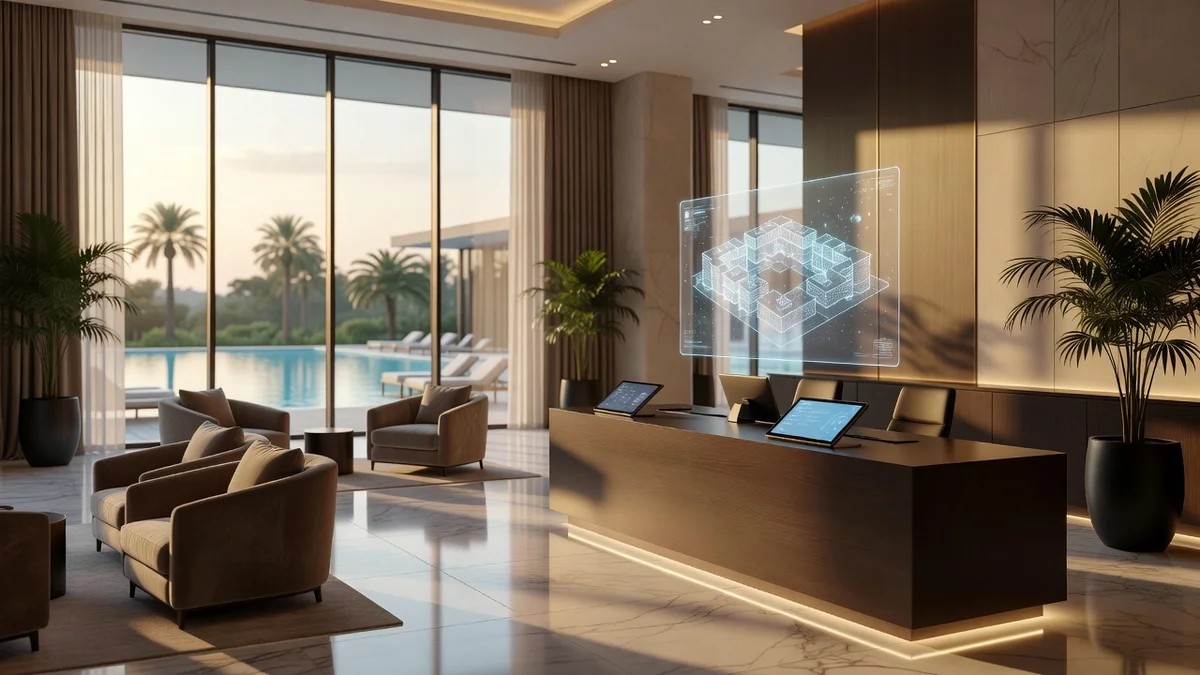
The Changing Face of Hotel Reception
Imagine checking into a hotel at 2 a.m. after a long flight. Instead of waiting for a tired receptionist to finish a phone call, you’re greeted instantly by a smart system that checks you in, issues your key, and answers your questions about breakfast hours—all in under two minutes. This is the reality many properties are creating with an AI front desk hotel approach. As guest expectations rise and staffing challenges persist, forward-thinking hotel managers, campsite owners, and resort operators are turning to AI to transform front-desk operations from a bottleneck into a competitive advantage.

Why Traditional Front Desks Are Struggling
Hotel reception teams handle an average of 150–200 guest interactions per day during peak season. Manual processes lead to long wait times, inconsistent service, and high staff turnover. According to recent hospitality industry data, 68% of guests say they would switch hotels after experiencing a wait longer than 10 minutes at check-in.
An AI front desk hotel solution addresses these pain points by automating repetitive tasks while freeing human staff to focus on high-value guest interactions.
Core Capabilities of AI-Powered Reception Systems
Modern AI reception tools combine several technologies that work together seamlessly:
- Natural language processing for handling guest inquiries via chat, voice, or kiosk
- Computer vision for contactless ID scanning and room key issuance
- Predictive analytics that anticipate guest needs based on booking data and past behavior
- Integration with PMS and CRM platforms to keep all guest information synchronized in real time
Practical Examples in Action
Consider a mid-size resort in Portugal that implemented an AI front desk hotel system last year. The property reduced average check-in time from 8 minutes to 90 seconds. Guests now complete registration via a tablet or their own phones, while the AI handles passport scanning, payment authorization, and upsell offers for spa packages. Staff members report spending 40% more time on personalized recommendations and problem-solving.
Another example comes from a 45-room boutique hotel in the Alps. During ski season, the AI system automatically detects repeat guests and pre-assigns their preferred rooms, sends weather alerts, and suggests equipment rental partners—all without any manual input from reception.
How to Implement AI at Your Property
Rolling out an AI front desk hotel solution doesn’t require ripping out your existing systems. Follow these steps for a smooth transition:
- Audit current workflows – Map every step of check-in, check-out, and guest inquiries to identify automation opportunities.
- Choose an integrated platform – Select a solution that connects directly with your property management system rather than adding another standalone tool.
- Start with high-volume tasks – Begin by automating check-in and basic FAQs before expanding to concierge-style services.
- Train your team – Position AI as a support tool rather than a replacement so staff feel empowered rather than threatened.
- Measure and refine – Track metrics such as wait time, guest satisfaction scores, and staff productivity weekly during the first three months.
Measurable Benefits for Hospitality Businesses
Properties using AI front desk hotel technology typically see:
- 25–40% reduction in average check-in time
- 15–20% increase in upsell revenue through timely, personalized offers
- 30% decrease in repetitive guest inquiries handled by staff
- Improved guest satisfaction scores, with some properties reporting a 12-point lift in NPS
Campsite operators have also benefited. One large European campsite network uses AI kiosks to manage peak arrival times on weekends, reducing queue lengths by more than half and allowing seasonal staff to focus on guest activities instead of paperwork.

Addressing Common Concerns
Many managers worry about losing the human touch. In practice, the opposite occurs. By handling routine tasks, AI frees receptionists to deliver more meaningful, personal service. Guests who prefer human interaction can always choose that option; the system simply removes friction for those who don’t.
Data privacy is another frequent question. Reputable AI solutions use encryption and comply with GDPR and similar regulations, storing only the information necessary for operations.
The Future of Front-Desk Operations
The hospitality industry continues to evolve rapidly. Properties that adopt AI front desk hotel capabilities now are better positioned to handle seasonal fluctuations, staff shortages, and rising guest expectations. The technology is no longer experimental—it’s becoming table stakes for competitive service delivery.
Ready to Modernize Your Reception?
If you’re a hotel manager, campsite owner, or resort operator looking to reduce operational friction while improving guest experiences, Jengu offers tailored AI automation solutions designed specifically for the hospitality industry. Their platform integrates smoothly with existing systems and scales to properties of any size. Visit jengu.ai to explore how intelligent automation can transform your front desk operations.